
First time buyers get 20% off *
The Parade of the Tin Soldiers (1897)
also known as "The Parade of the Wooden Soldiers"
Leon Jessel (1871 - 1942)
Sax Quartet SATB
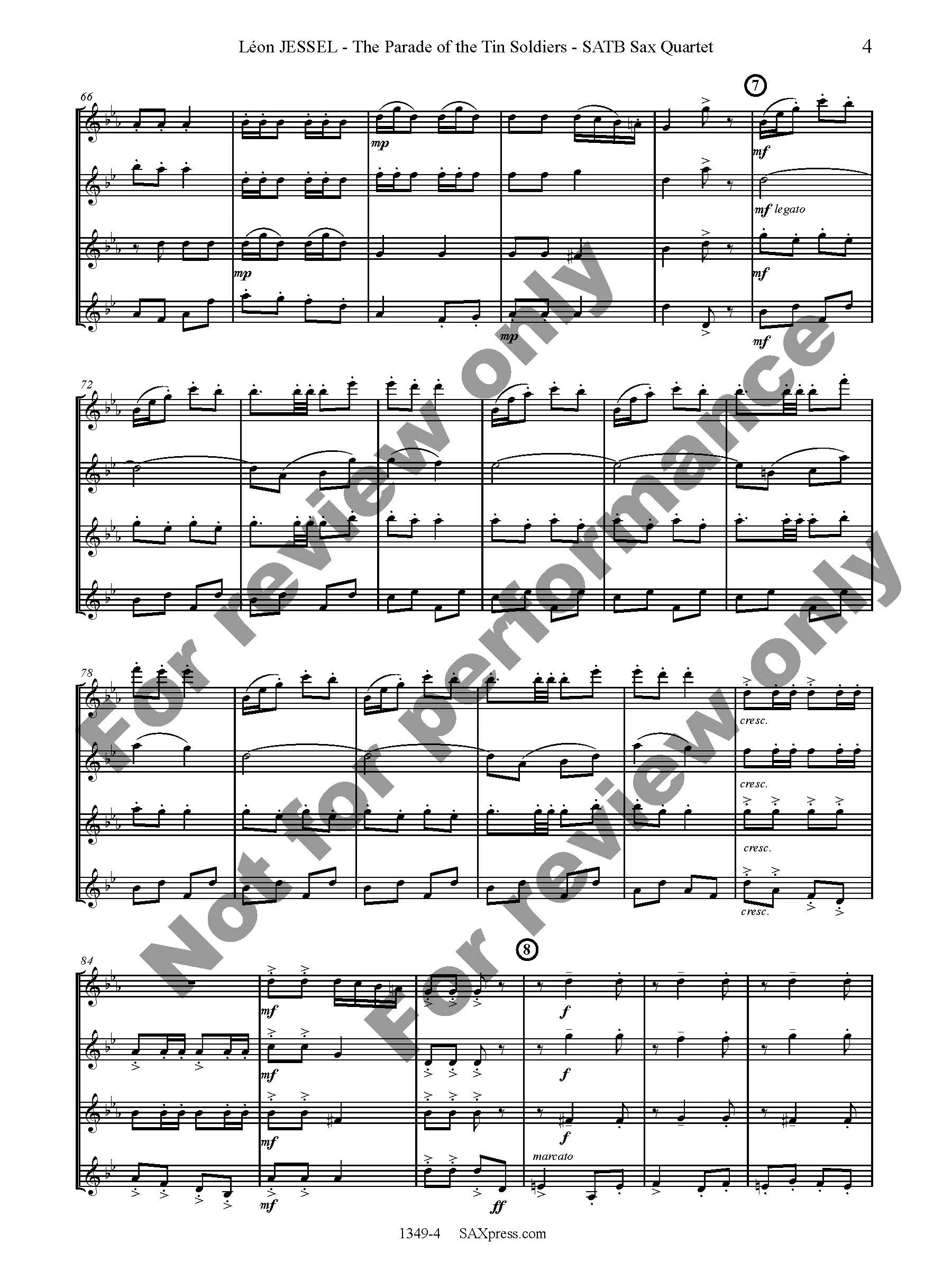
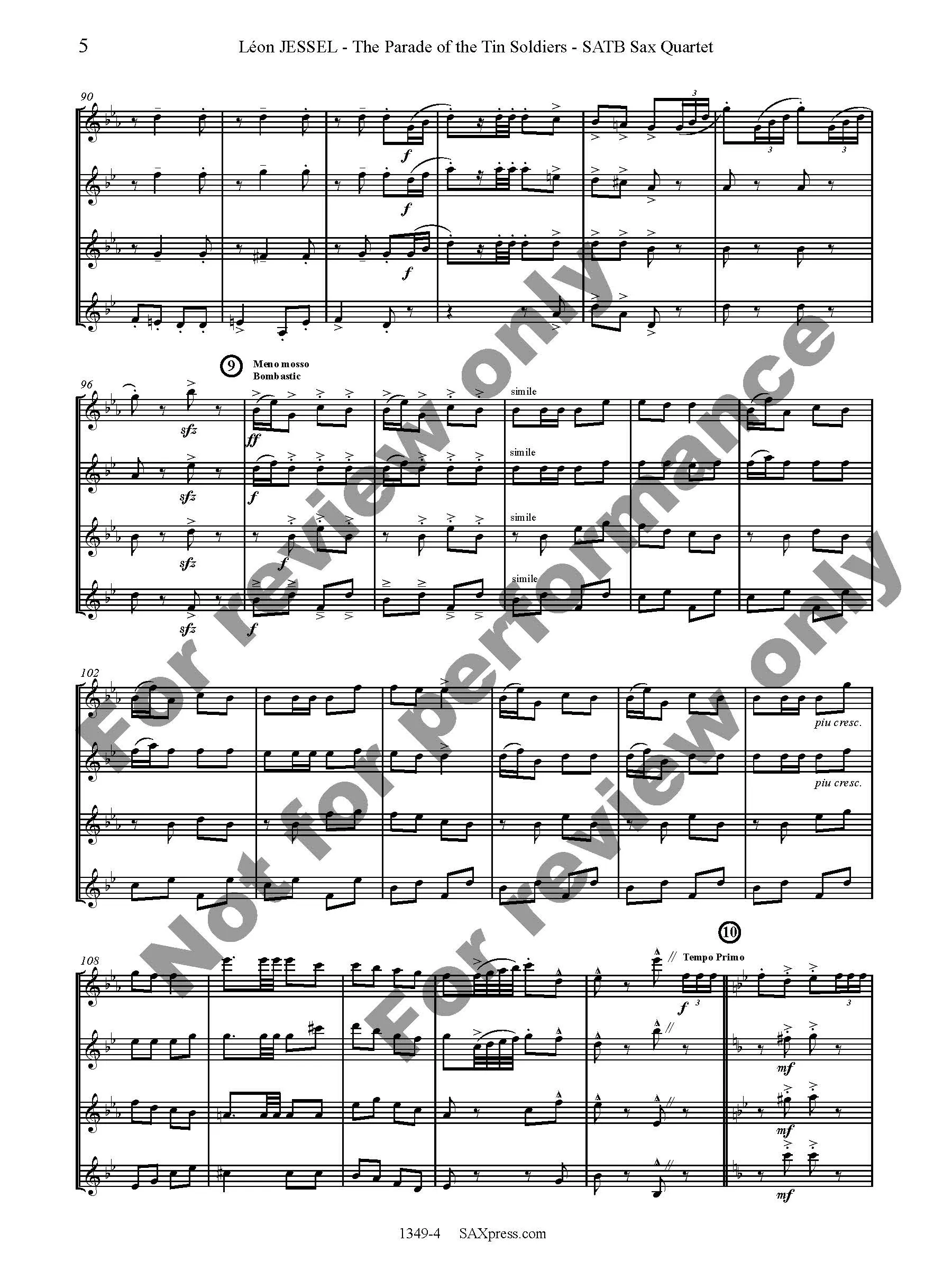
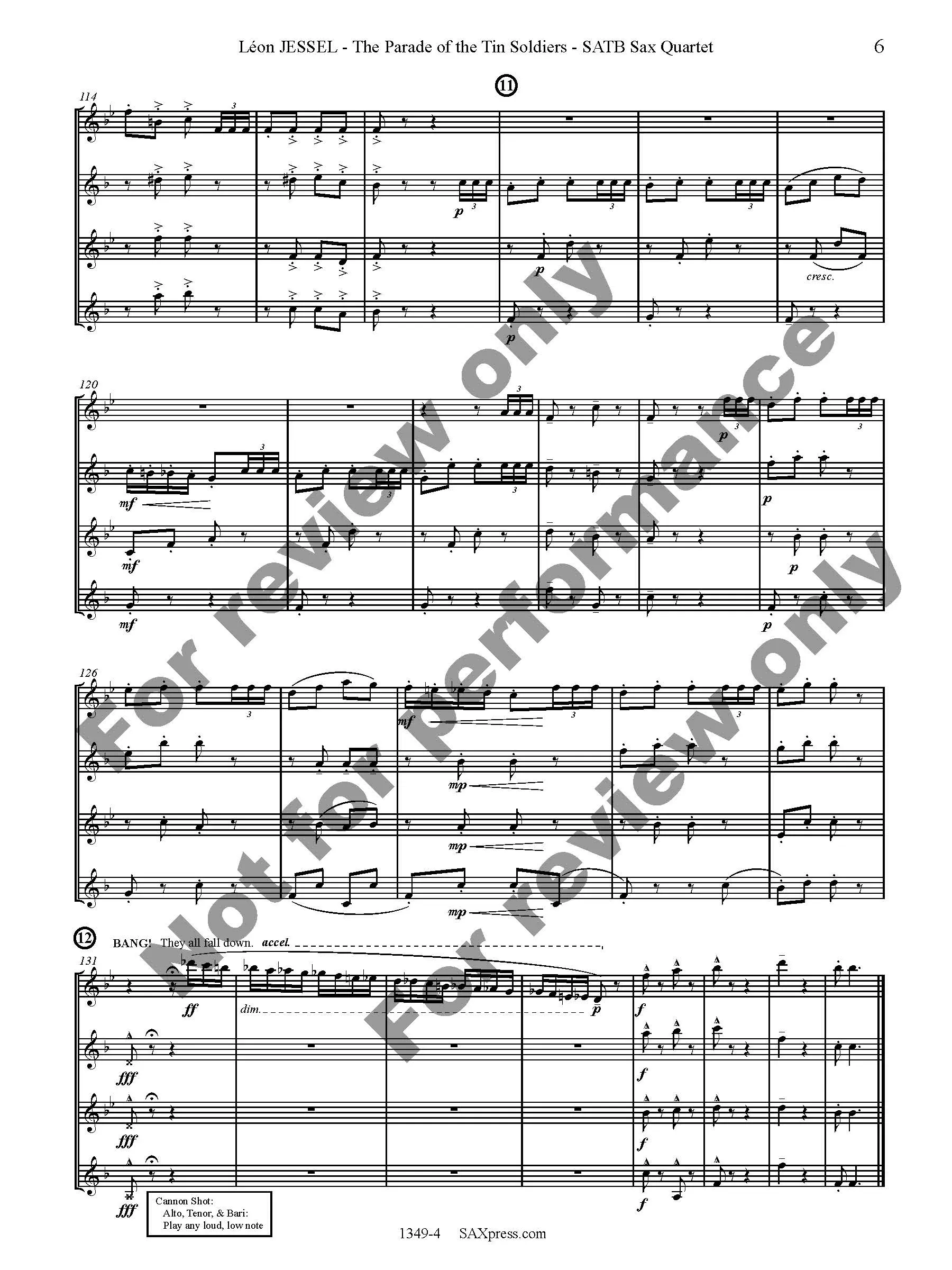
The Parade of the Tin Soldiers by Leon Jessel arranged for Sax Quartet SATB. This popular, jaunty march was composed for as a solo piano work by Jessel in 1897. It achieved immediate popularity. He arranged it for orchestra in 1905. It has been used in many movies, stage productions, and cartoons. Today it is popular as a Christmas tune, thanks in part to its yearly use by the Radio City Rockettes as part of their Christmas show since 1933.
The Parade of the Tin soldiers is a bouncy little march that tells a story with a funny ending. First there’s the bugle call to the soldiers. The soldiers assemble and begin their parade. At the end, a cannon is fired and they all fall down. No real harm is done and there’s a happy ending. The melody bounces back and forth between all the saxophone parts. You’ll have fun playing it and your audience will love it.
Watch a scrolling score video of The Parade of the Tin Soldiers. (YouTube)
With this arrangement of The Parade of the Tin Soldiers you get:
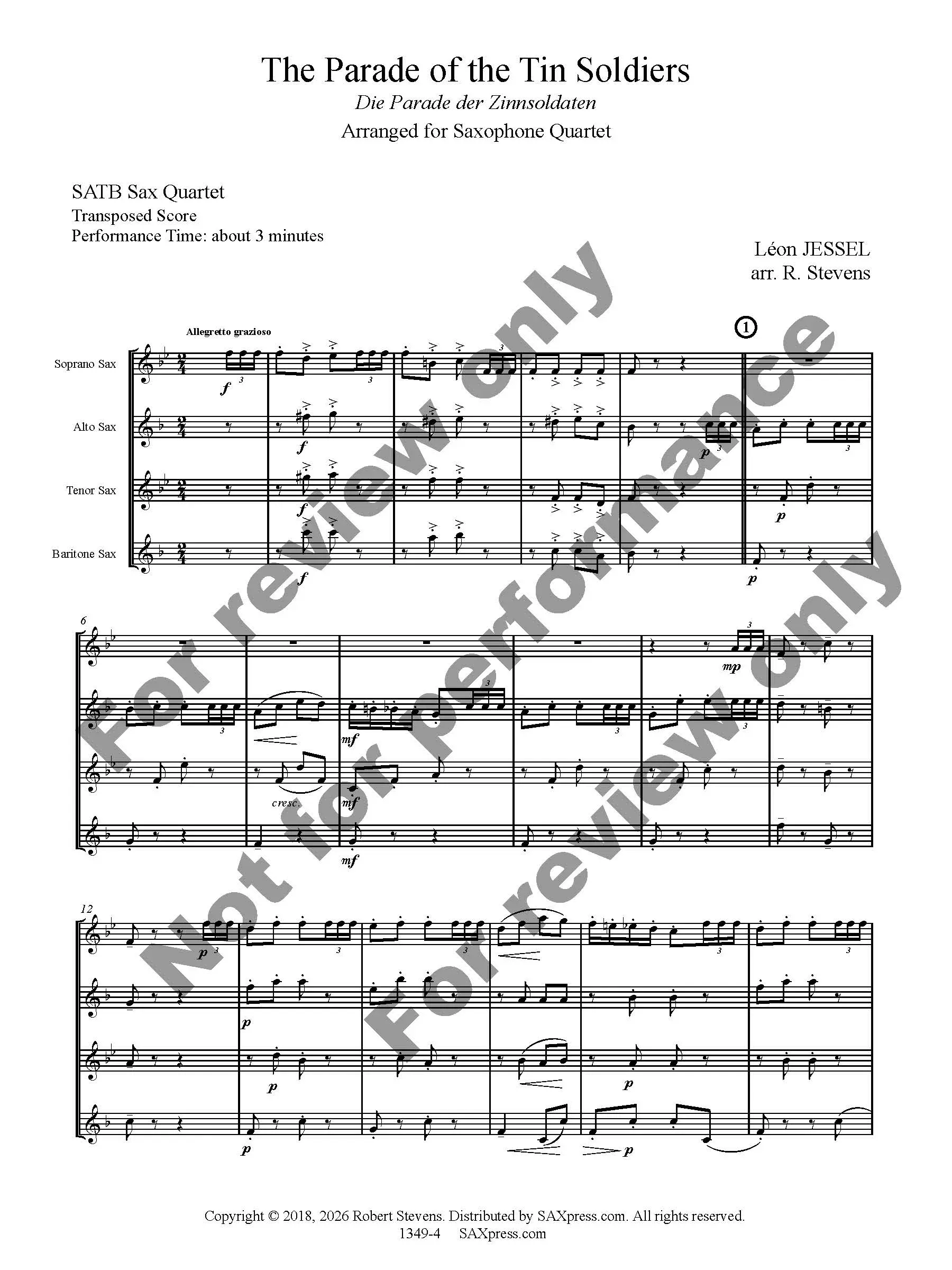
1 Saxophone Quartet Score, transposed (12pp including covers, 9″ x 12″)
1 set of saxophone parts (each 4pp including covers, 9″ x 12″)
- soprano sax
- alto sax
- tenor sax
- baritone sax
The range for each saxophone part is shown below.
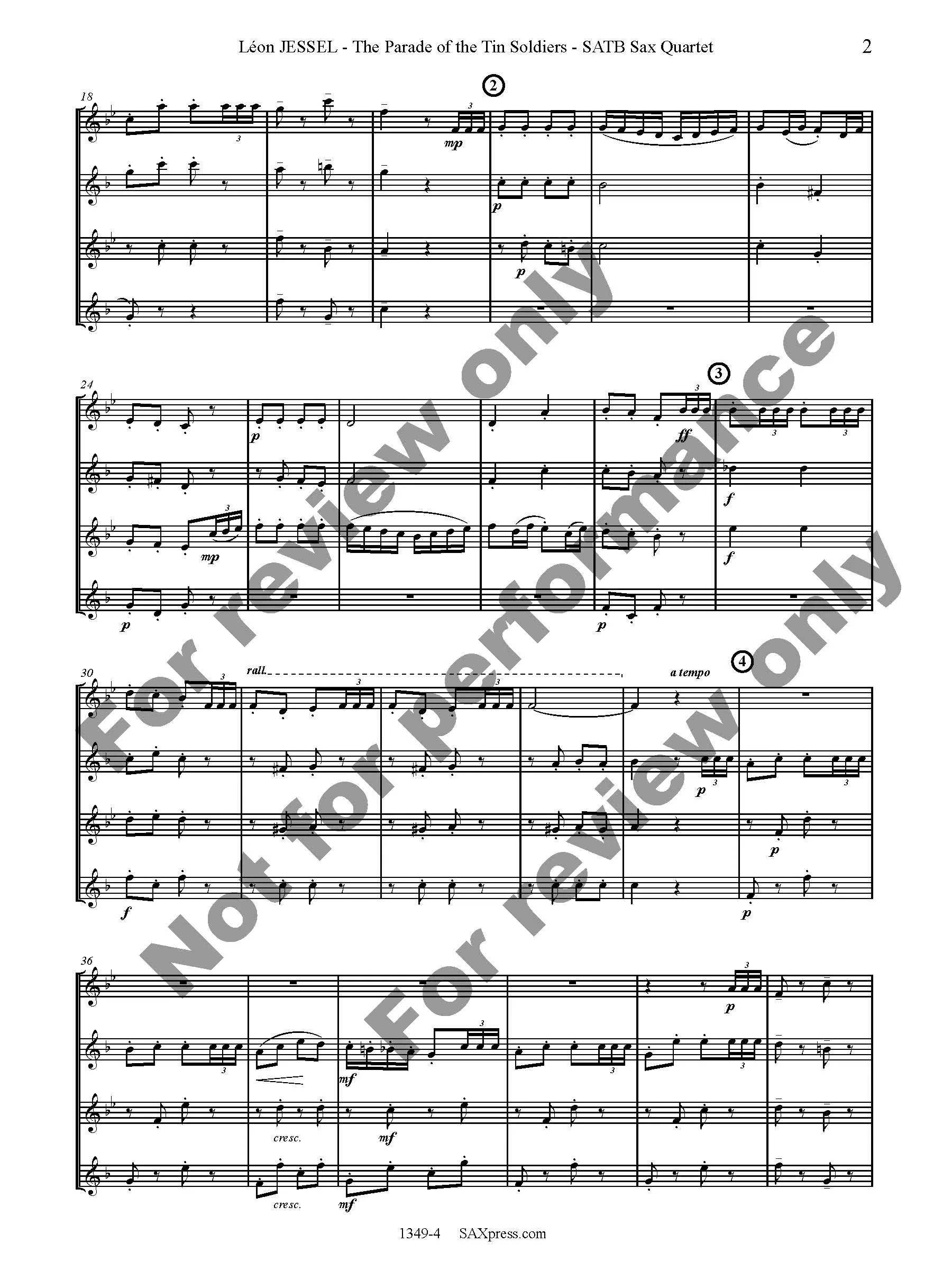
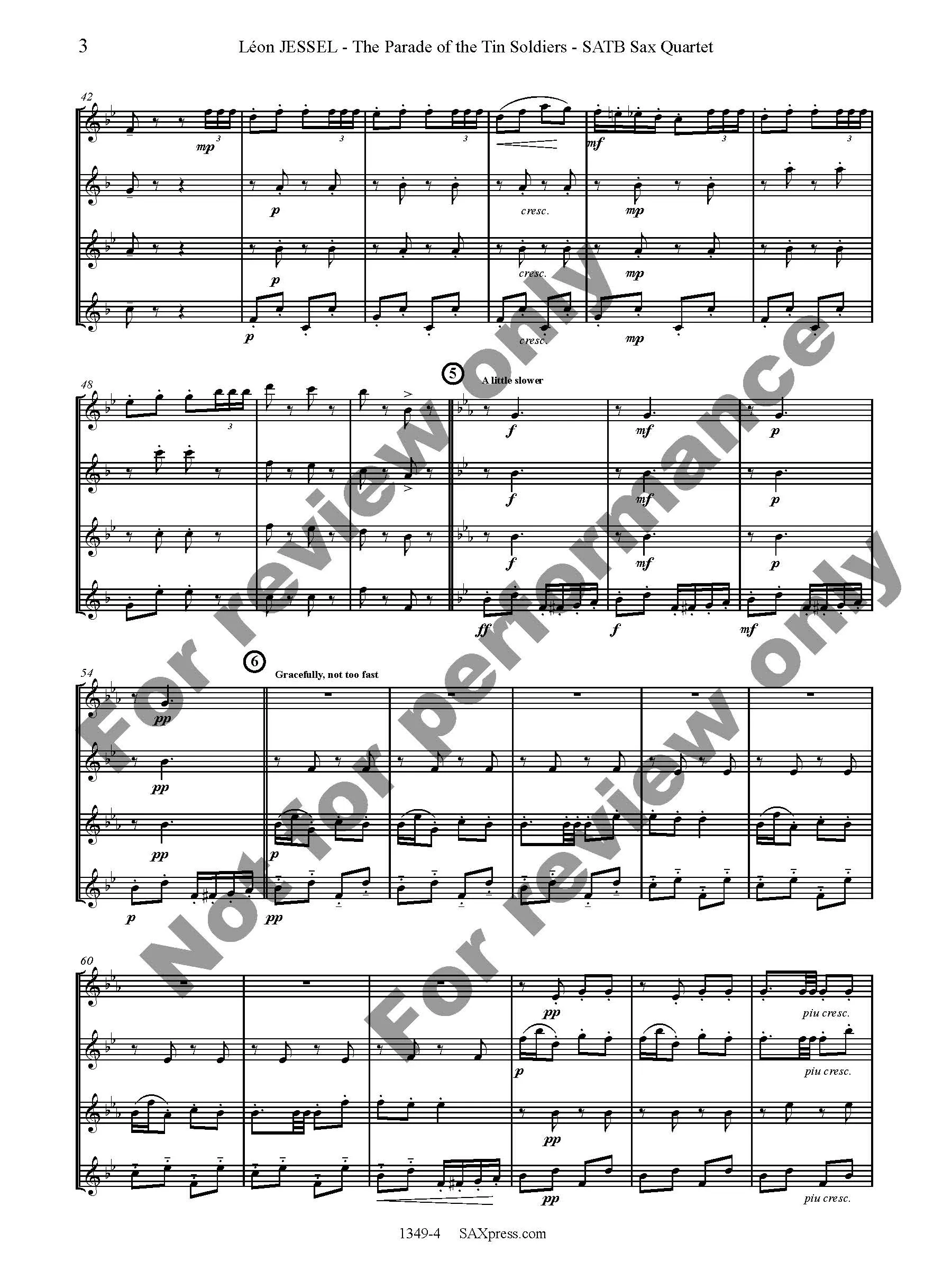
Audio and score excerpts are available above.
Saxophone Range for The Parade of the Tin Soldiers

About the Composer
Leon Jessel, (January 22, 1871 – January 4, 1942) was born in the eastern German city of Stettin (now Szczecin, Poland), the son of a Jewish merchant and his American wife. Although his parents wished him to become a merchant or businessman, Jessel was instead drawn to become a musician, and left school at the age of 17 to pursue music and musical theater. After studying with various teachers between 1888 and 1891, Jessel began a successful career as a composer and theater conductor working in many German cities. He achieved his greatest popularity in 1920’s Berlin where he composed many operettas and music theater shows.
Because Jessel was a Jew by birth (he converted to Christianity at the age of 23), with the rise of Nazism in the late 1920s, his composing virtually came to an end, and his musical works, which had been very popular, were suppressed.
Jessel thought, due to his conservative ideology and the popular, nationalistic themes of his music, that he would be accepted in Germany even after the Nazi rise to power. Instead, he was rejected by Nazi leadership because of his Jewish descent. Early as 1927 his works were the subject of censorship and boycott. All performances of his works were banned in 1933.
In 1937 he was forced out of the Reichsmusikkammer (the State Music Institute), and recordings and distribution of his works were prohibited. On December 15, 1941, Jessel was arrested and delivered to the Gestapo in Berlin. He was tortured in a basement of the Police Bureau at Alexanderplatz. On January 4, 1942, in the Berlin Jewish Hospital he died of injuries sustained during torture.
Reviews
There are no reviews yet.